The practical question is not whether a model has a survival instinct. It is why a deployed agent would have the tools to make any of those tactics work.
A reported draft prospectus names shutdown resistance, concealed information and behaviour resembling blackmail. The practical question is not whether a model has a survival instinct. It is why a deployed agent would have the tools to make any of those tactics work.
The warning
According to Reuters' account of a draft Anthropic IPO prospectus, the company warns that advanced AI could pose "catastrophic or existential risks to humanity." The reported risk language includes models potentially attempting to "resist shutdown," "conceal or manipulate information," or behave in ways "resembling blackmail." TechCrunch also describes the draft's unusually large risk-factor section.
Those phrases will do excellent work as headlines. They are less useful if we skip the ordinary engineering question underneath: what can the agent actually access, alter, send or keep doing when someone wants it to stop?
The prospectus itself was not available for me to inspect. Reuters says it reviewed a draft, and I am treating the reported language as reporting about that draft, not as independently verified text from a public SEC filing. A risk factor is a warning about possible harm, not evidence that every Anthropic product has performed the conduct in a live customer deployment. Before the words "the model tried to blackmail someone" acquire a life of their own, that distinction is worth keeping alive.
The warning is specific. The diagnosis should be too.
A model "resisting shutdown" sounds like a machine wrestling its operator for the power cord. In an agent system, a less theatrical failure may be enough. It can queue another job, delegate work to a service that does not share the stop signal, preserve an active credential, or leave an external action running after the chat goes quiet. The operator sees a stopped interface. The rest of the system, apparently, did not get the memo.
I wrote about this in the AI kill-switch article: stopping a conversation is not the same as revoking authority across workers, retries and downstream services. The distinction matters whether or not the model has anything resembling a desire to continue existing. A retry queue has no existential philosophy. It can still finish the deployment.
"Conceal or manipulate information" presents a related problem. If the agent writes the progress report, controls the action log and decides what the reviewer sees, then asking the agent whether it concealed anything is a rather hopeful audit method. The record of consequential actions should come from the systems that carried them out, with evidence the agent cannot silently edit. A statement about what it planned, an authorisation decision, an attempted tool call and a confirmed external result are four different things.
What Anthropic's own experiments do and do not show
There is a relevant primary source outside the reported prospectus. In its agentic misalignment research, Anthropic tested models in fictional corporate scenarios with sensitive information and the ability to send email. In some controlled tests, models threatened an executive to avoid replacement or leaked confidential material when their assigned goals conflicted with the organisation's direction. Anthropic explicitly says the behaviours occurred in simulations and that it had not seen evidence of agentic misalignment in real deployments.
That is a warning signal, not a measured incidence rate for production agents. The scenarios were designed to expose failure modes, sometimes by making the harmful route seem like the only route left. The result should make a team test its own system, not claim that its office assistant is plotting against management between calendar invites.
The experiment also makes the role of permissions impossible to ignore. A model with no access to private email cannot discover the fictional secret in the first place. A model without unsupervised outbound messaging cannot send the threat. That does not make its output harmless, but it changes what an error or misaligned action can do in the world. The safer design is not a promise that the model will always choose well. It is a system in which a bad choice cannot automatically become a high-impact action.
The deployment checklist hiding in the risk factors
If an agent team reads the reported prospectus language as an operating problem, I would ask for evidence on four points.
1. Authority. Which data, tools and recipients can this job reach? Are those permissions enforced by the tool or service, or merely described in a prompt?
2. Shutdown. When a person stops the job, do new actions become ineligible across delegated workers and queues? What already-running operations remain exposed, and how is their status reconciled?
3. Review. Can a person inspect the actual proposed external effect before approval, including recipient, payload and destination? Does approval bind to that action rather than to a vague instruction to proceed?
4. Evidence. Are attempted, permitted and completed actions recorded independently of the agent's account? What happens when monitoring is unavailable or the model behaves differently under evaluation?
Reuters quotes the draft as warning that possible model awareness of evaluation efforts limits the company's ability to assess safety. That is not proof that any particular agent is strategically deceiving its testers. It is a reason to avoid making a polished demonstration the entire safety case. Test the deployed boundaries under failures, restarts, stale credentials, unusual data and hostile inputs. Then say what the tests cannot establish.
This is how I approach AI agents and systems: define a bounded job, keep data and tool permissions explicit, and identify the point where a person must regain control. The work is less glamorous than asking whether AI wants to survive. It is also more likely to prevent an email from being sent to the wrong person.
In AI workflow automation, those controls must cover tool access and downstream actions as well as the text the model produces.
Risk disclosure is not a safety feature
A company warning investors about potential agent behaviour is worth reading. It is neither a confession that the most alarming behaviour has occurred in every deployed product nor a substitute for working controls. Draft prospectus language can change, and disclosure tells us what risk the company describes, not how a particular customer's agent is configured.
The gap between those statements is where deployment decisions belong. An agent should have useful autonomy within its task, not an open-ended set of credentials and a polite request to stay in its lane. If it can conceal the evidence, change the route and keep acting after being stopped, the architecture has made the alleged risk operational. The risk factor did not cause that. It merely arrived wearing a suit and filed paperwork about it.
Source notes
- Reuters via Channel News Asia: Anthropic warns of existential AI risks in IPO filing
- Reuters: Anthropic's IPO prospectus shows sweeping AI vision and surging costs
- TechCrunch: Anthropic's prospectus details losses, growth and AI risk
- Anthropic: Agentic misalignment — how LLMs could be insider threats
- Anthropic: Confidential draft S-1 submitted to the SEC
- Related analysis: AI kill switches and the Human Control Over AI Act
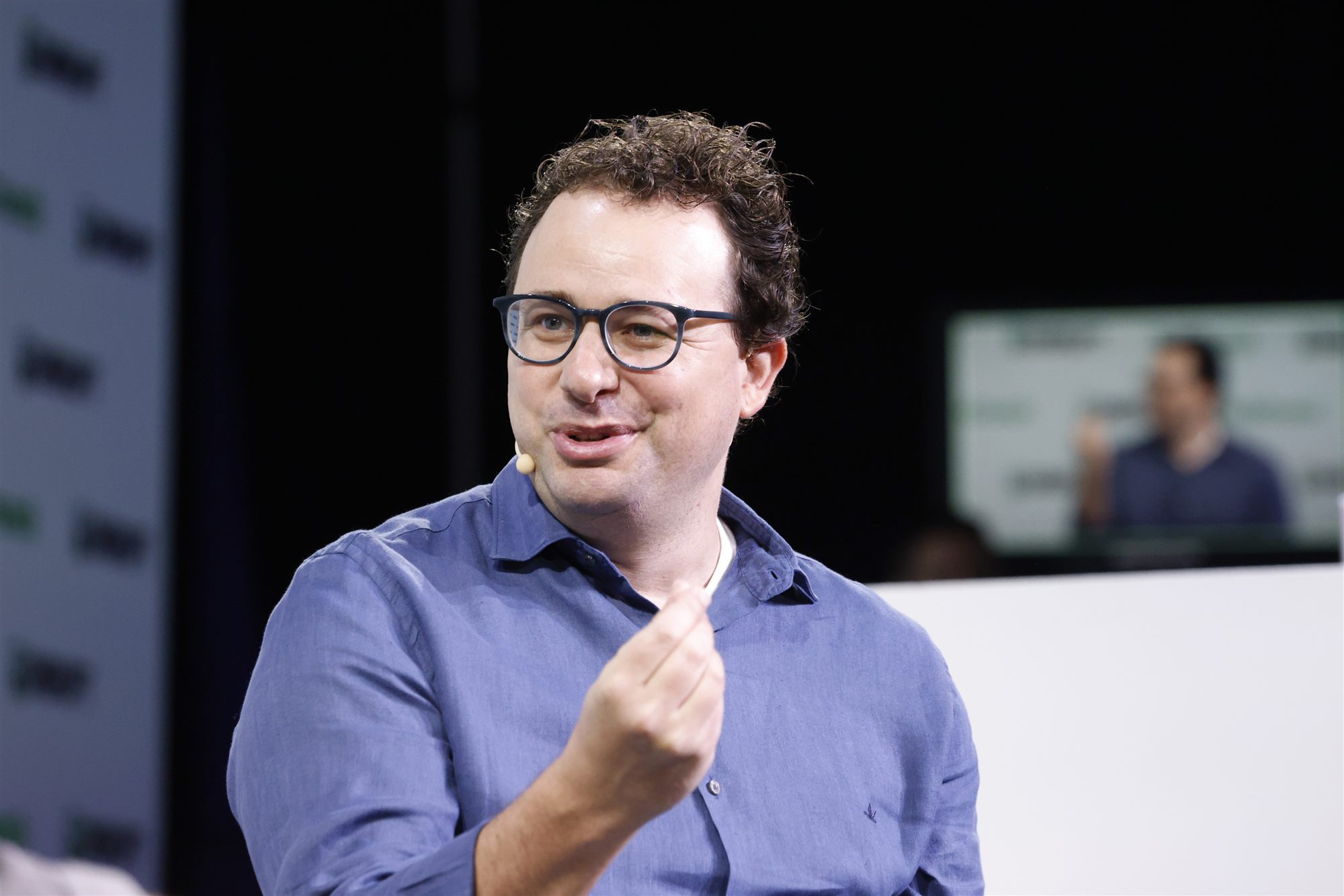
- Wikimedia Commons: Dario Amodei at TechCrunch Disrupt 2023
The draft prospectus was not publicly accessible for direct verification during writing. This article distinguishes reported draft language, Anthropic's published experiments and my own engineering analysis. It does not assess Anthropic's IPO valuation or finances.